
How to Read Your Birth Chart: Complete Beginner's Guide
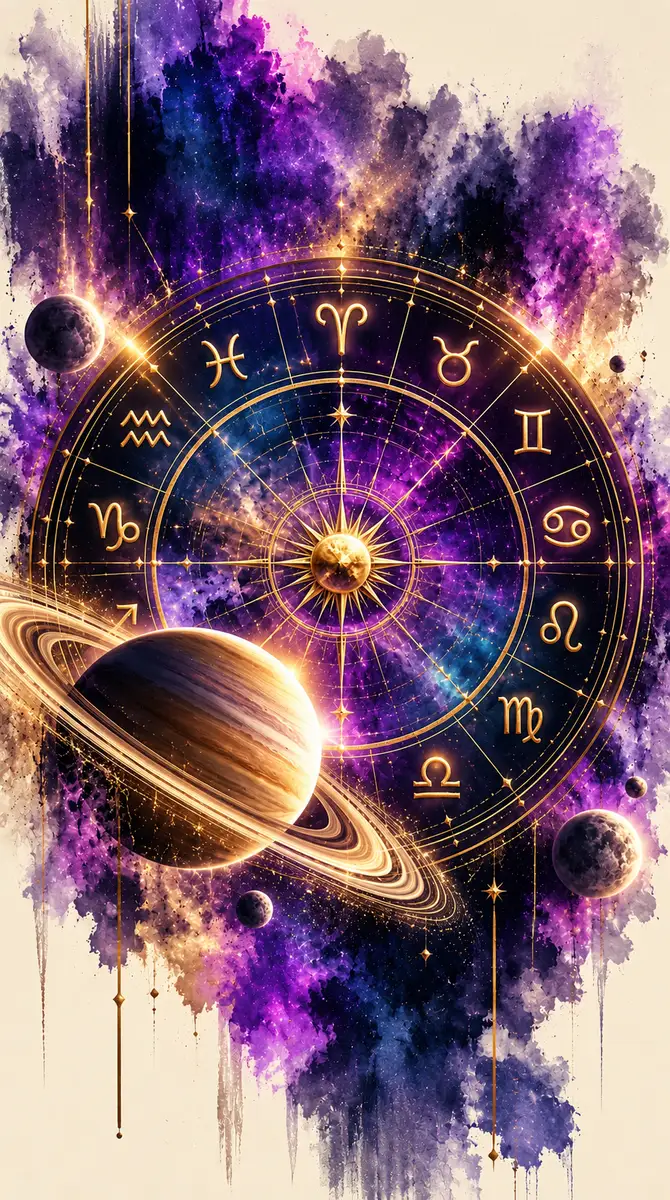
You open your birth chart and find a wheel full of symbols, lines and numbers. Where do you begin? Start with three things: the planet, the sign it occupies and the house it falls in. You do not need to decode the whole wheel at once.
This beginner’s guide explains how astrologers read a natal chart, with a worked example and common mistakes to avoid. Astrology is an interpretive tradition, not a scientifically validated way to predict personality or future events. Use the ideas for reflection rather than as instructions for important life decisions.
What is a birth chart?
A birth chart, also called a natal chart, maps the apparent positions of celestial bodies for a particular date, time and place. Astrologers organise those positions into zodiac signs and houses, then interpret the relationships between them. The astronomical positions can be calculated; the personal meanings assigned to them belong to astrology.
Step 1: Check your birth details and chart settings
Date: check the day, month and year carefully.
Time: use a recorded local birth time where possible. Avoid guessing an exact time.
Place: enter the correct town or city so the calculator can account for location.
Settings: note whether the chart uses a tropical or sidereal zodiac and which house system it uses.
Different systems can produce different sign or house placements. This does not mean you should combine whichever results sound most appealing. Choose an approach and understand how it works. Our guide to birth details needed for a chart reading explains what to check.
What if you do not know your birth time?
You can still explore some planetary sign placements, but the Ascendant and houses should be treated as uncertain. The Moon may also change signs during the birth date. A calculator’s default noon time is a placeholder, not a confirmed birth time.
Step 2: Find your Sun, Moon and rising sign
These three placements are a manageable introduction. Astrologers traditionally associate the Sun with identity and purpose, the Moon with emotional habits, and the rising sign or Ascendant with the way someone approaches new situations. None describes a whole person.
For example, a Leo Sun and Virgo Moon might be interpreted as a contrast between wanting creative expression and feeling comfortable with preparation. Whether that reflects your experience is something to consider, rather than assume. Explore the Moon sign guide for more context.
Step 3: Understand what each planet represents
Sun: identity, purpose and vitality.
Moon: feelings, habits and emotional needs.
Mercury: thinking, learning and communication.
Venus: affection, preferences and values.
Mars: initiative, drive and conflict.
Jupiter: growth, beliefs and opportunity.
Saturn: limits, responsibility and commitment.
Uranus, Neptune and Pluto: themes often interpreted through change, ideals and transformation in modern Western astrology.
These are traditional keywords, not guarantees of a talent or outcome. Different astrological schools place different emphasis on particular bodies.
Step 4: Add the sign and house
A useful beginner’s formula is planet = the theme; sign = its style; house = the area of life. For example, Venus in Libra in the seventh house might prompt a discussion about fairness and affection in partnerships. It does not guarantee marriage or a trouble-free relationship.
The twelve houses at a glance
First: identity and presentation.
Second: personal resources and values.
Third: everyday communication and learning.
Fourth: home, roots and private life.
Fifth: creativity, play and romance.
Sixth: routines, work and traditional health themes.
Seventh: partnerships and agreements.
Eighth: shared resources and vulnerability.
Ninth: beliefs, higher learning and wider horizons.
Tenth: public role, direction and career.
Eleventh: friendships, groups and shared hopes.
Twelfth: solitude, retreat and hidden patterns.
An empty house does not mean that part of your life is missing. Astrologers also consider the sign on its cusp and its ruling planet. A health-related house is not a medical diagnosis.
Step 5: Read the aspects without labelling them good or bad
Aspects are angular relationships between chart positions. Common examples include a conjunction (near 0°), sextile (60°), square (90°), trine (120°) and opposition (180°). Astrologers allow a degree of variation, called an orb, which differs by method.
A square may be interpreted as tension requiring attention, while a trine may suggest an easier connection. Neither proves that something harmful or fortunate will happen. Read aspects alongside the whole chart, not as isolated verdicts.
A simple worked example
Imagine a fictional chart with Mercury in Gemini in the tenth house. Mercury introduces the theme of communication; Gemini adds curiosity and variety; the tenth house brings public life or work into the discussion.
A useful reflection question would be: “Do I enjoy work that involves explaining, writing or exchanging ideas?” An unhelpful conclusion would be: “This placement means I must become a journalist.” Your interests, opportunities, skills and choices matter.
Common beginner mistakes to avoid
Reading only the Sun sign: consider other placements before drawing a conclusion.
Ignoring birth-time uncertainty: do not treat uncertain houses as precise.
Mixing chart systems without noticing: check the settings before comparing results.
Calling a placement a curse: no symbol establishes your worth or determines your future.
Collecting contradictory predictions: focus on one question and assess whether the interpretation is useful.
Try a ten-minute chart exercise
Write down your Sun, Moon and rising sign, then choose one planet whose theme interests you. Add its sign and house. Write one reflection question and one real example from your life that supports—or challenges—the interpretation. This helps you stay curious without forcing every description to fit.
Frequently asked questions
Can a beginner read a birth chart?
Yes. Start with planets, signs and houses, then add aspects gradually. Understanding a few placements is more useful than memorising every symbol at once.
Why do two calculators show different charts?
Check the entered time, location, time zone, zodiac and house system. A settings difference can explain a different result.
Can my chart tell me exactly what will happen?
No. A chart should not be treated as a verified forecast or as a substitute for evidence and appropriate professional advice.
What should I ask in a reading?
Ask the reader to explain their system and uncertainty. “What themes might help me reflect on this situation?” is more useful than demanding a guaranteed outcome.
If you want to explore a longer cycle after learning the basics, read our guide to Saturn return meaning and timing.